Compose — run scripts in a page
A Vancetope page can run things, not just hold text. Drop a compose block into a page, write a script, and run it — it executes server-side in a fresh workspace and the result lands right back in the page. No terminal, no setup. And it’s the same block whatever the language: swap the task type and you’re running Shell, Python, JavaScript, R, LaTeX or an LLM call.
Shell
The simplest case: an exec task running a plain shell command.
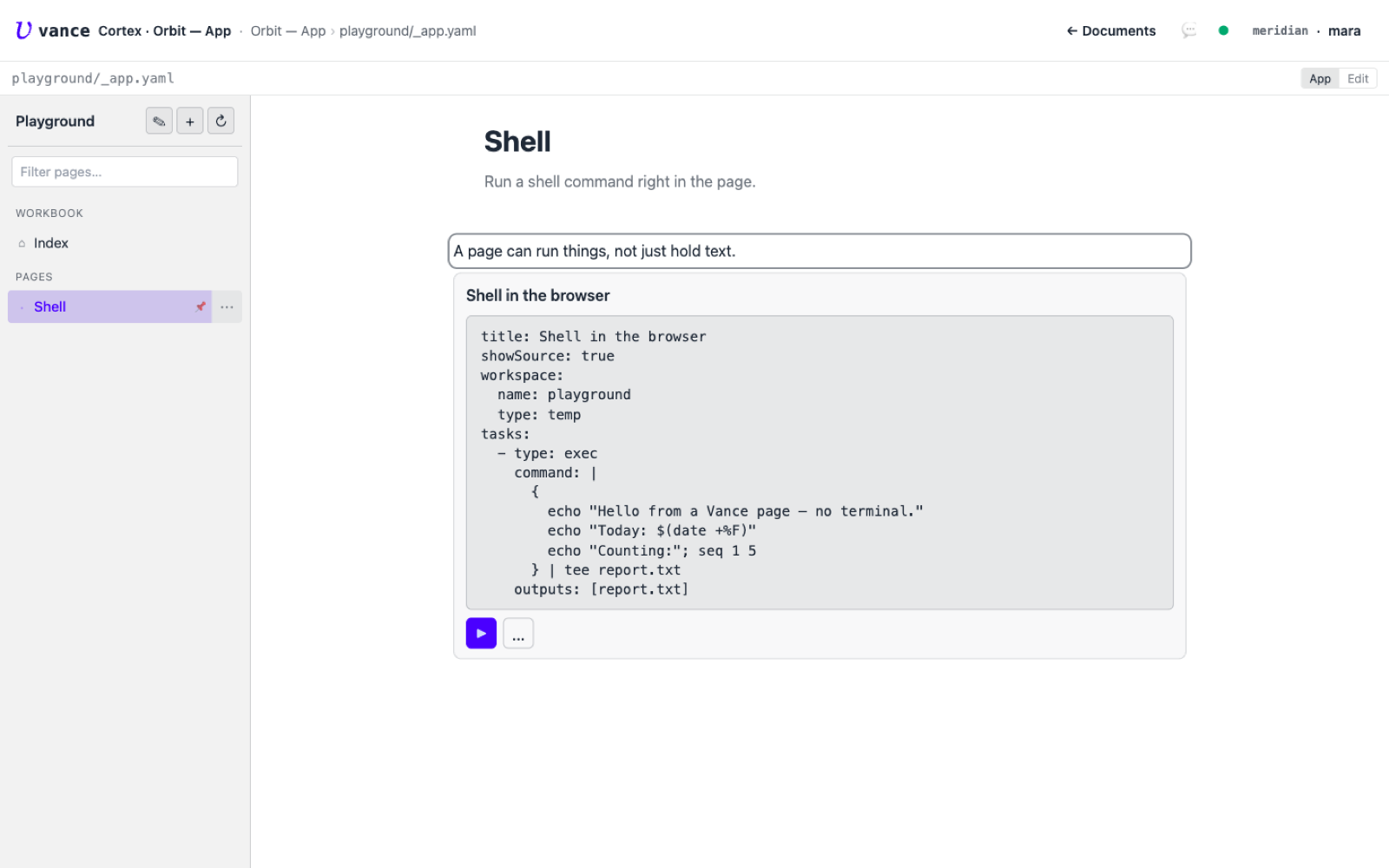
exec task. Anything you'd type in a terminal goes here.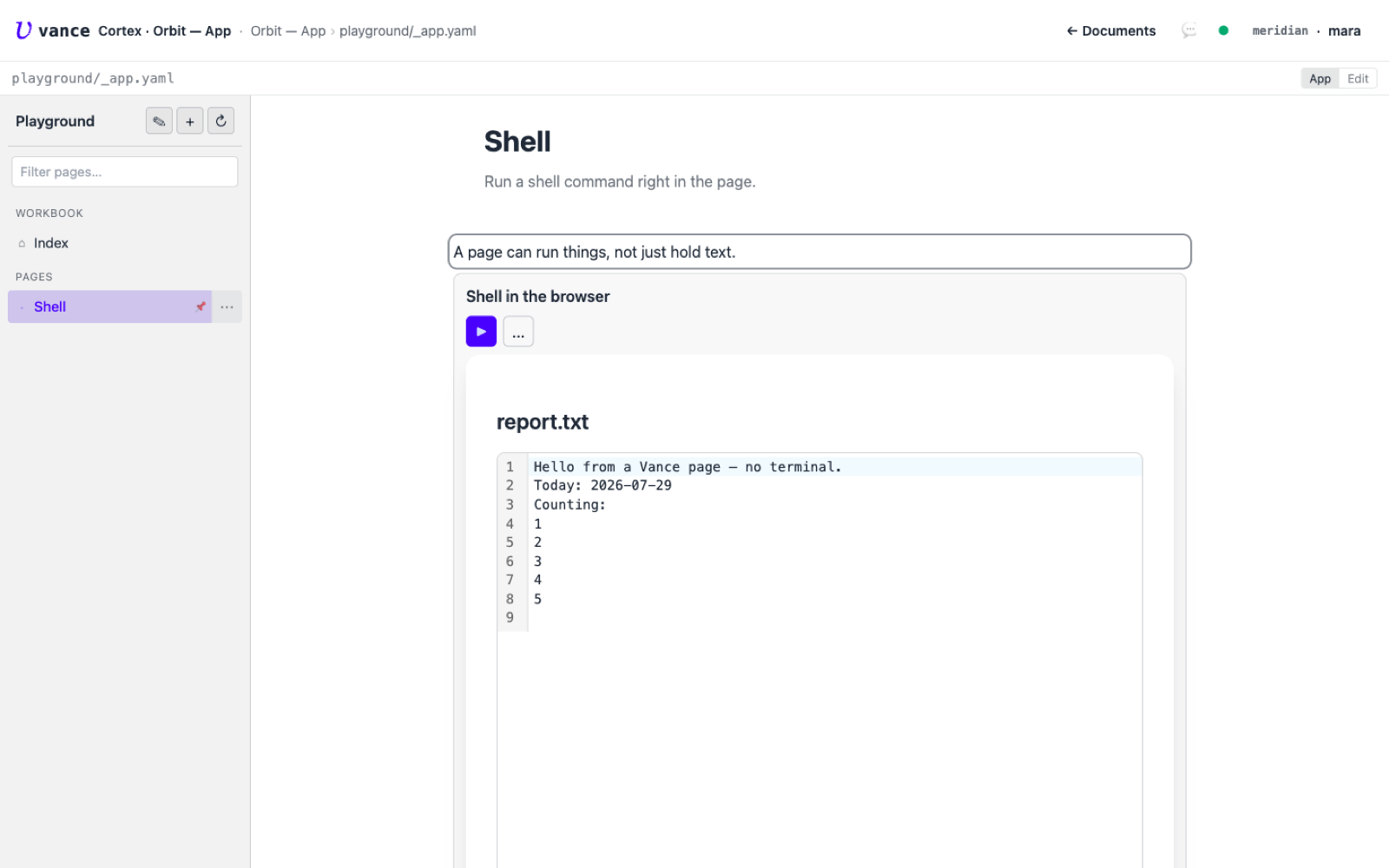
report.txt. Nothing ran in your browser.Python
Same block, type: python — inline code (or a workspace file), the standard
library, files it writes surfaced as outputs.
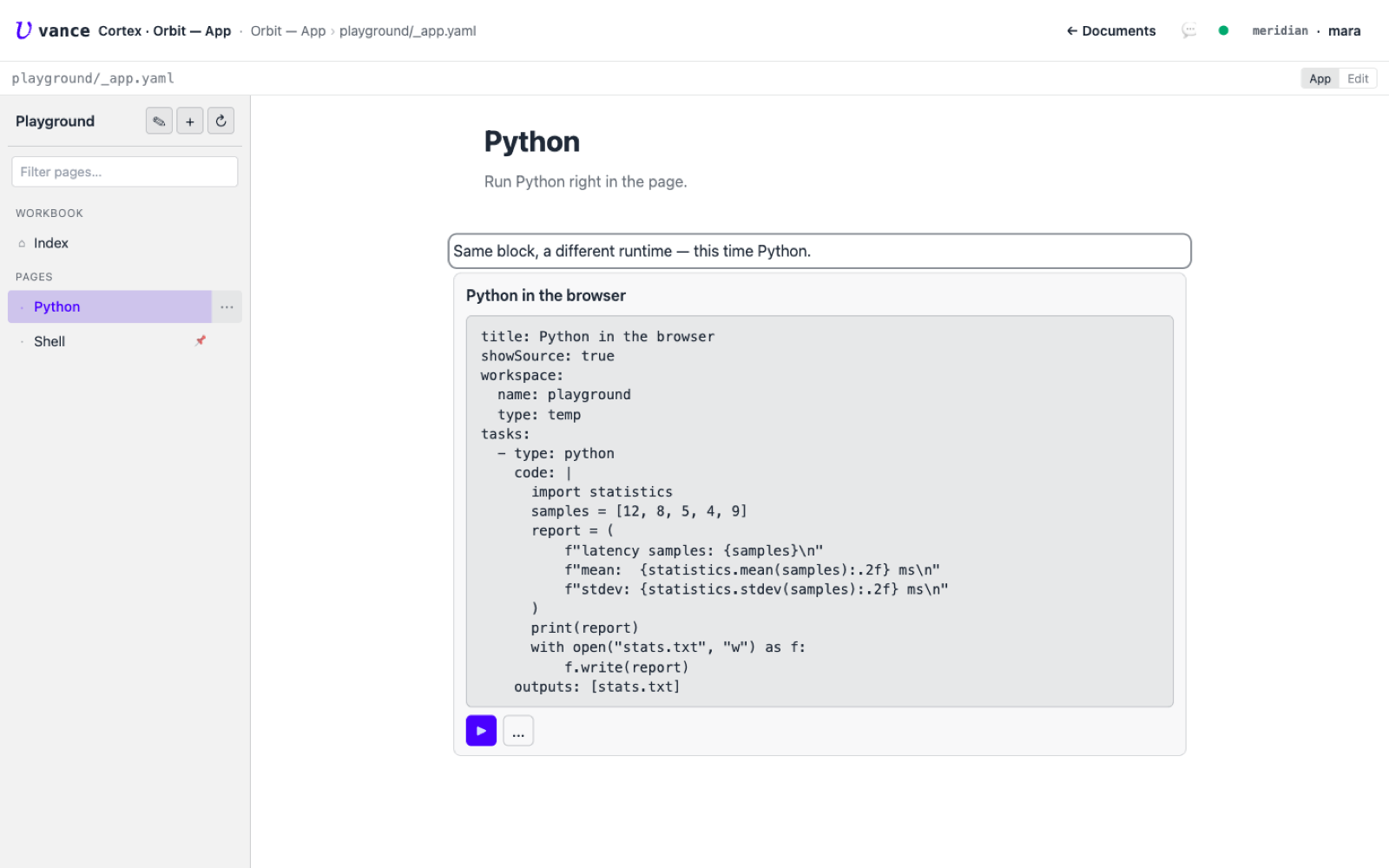
python and write code — here a quick latency stat over a handful of samples.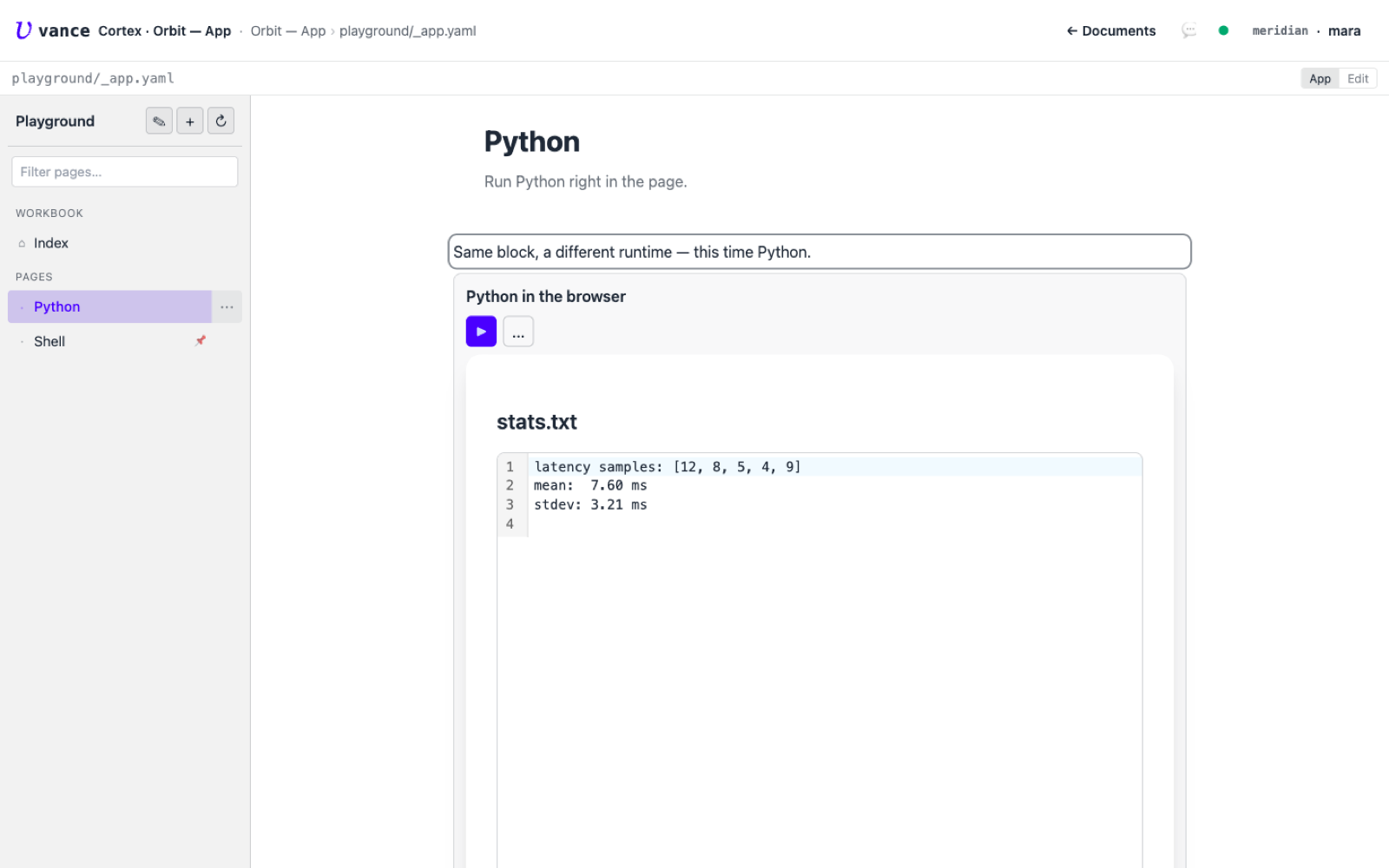
stats.txt come back into the page.LaTeX
type: tex-task imports a .tex document, typesets it, and hands back a PDF —
rendered inline, right in the page.
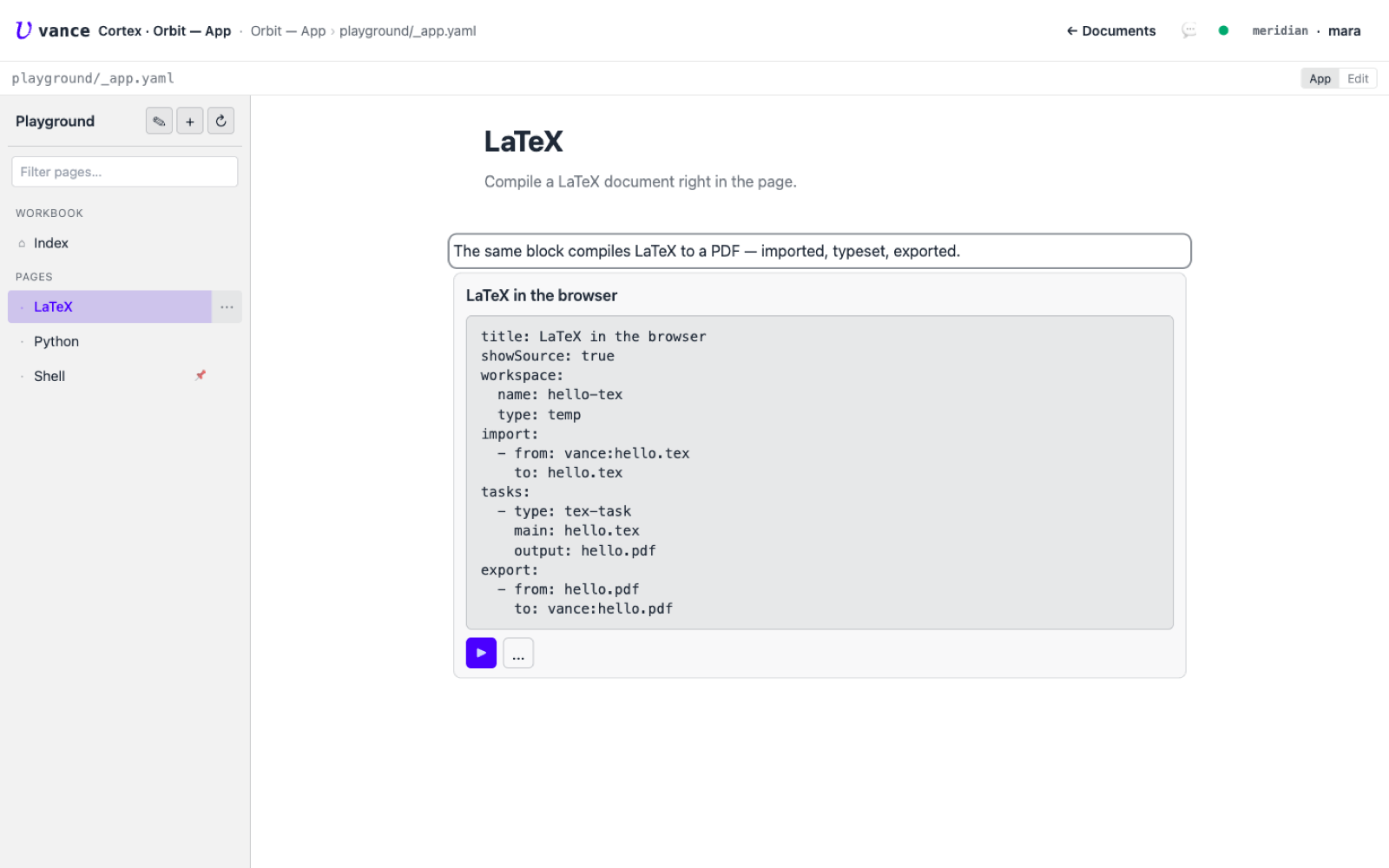
.tex file (vance:/hello.tex), a tex-task to compile it, and an export for the PDF.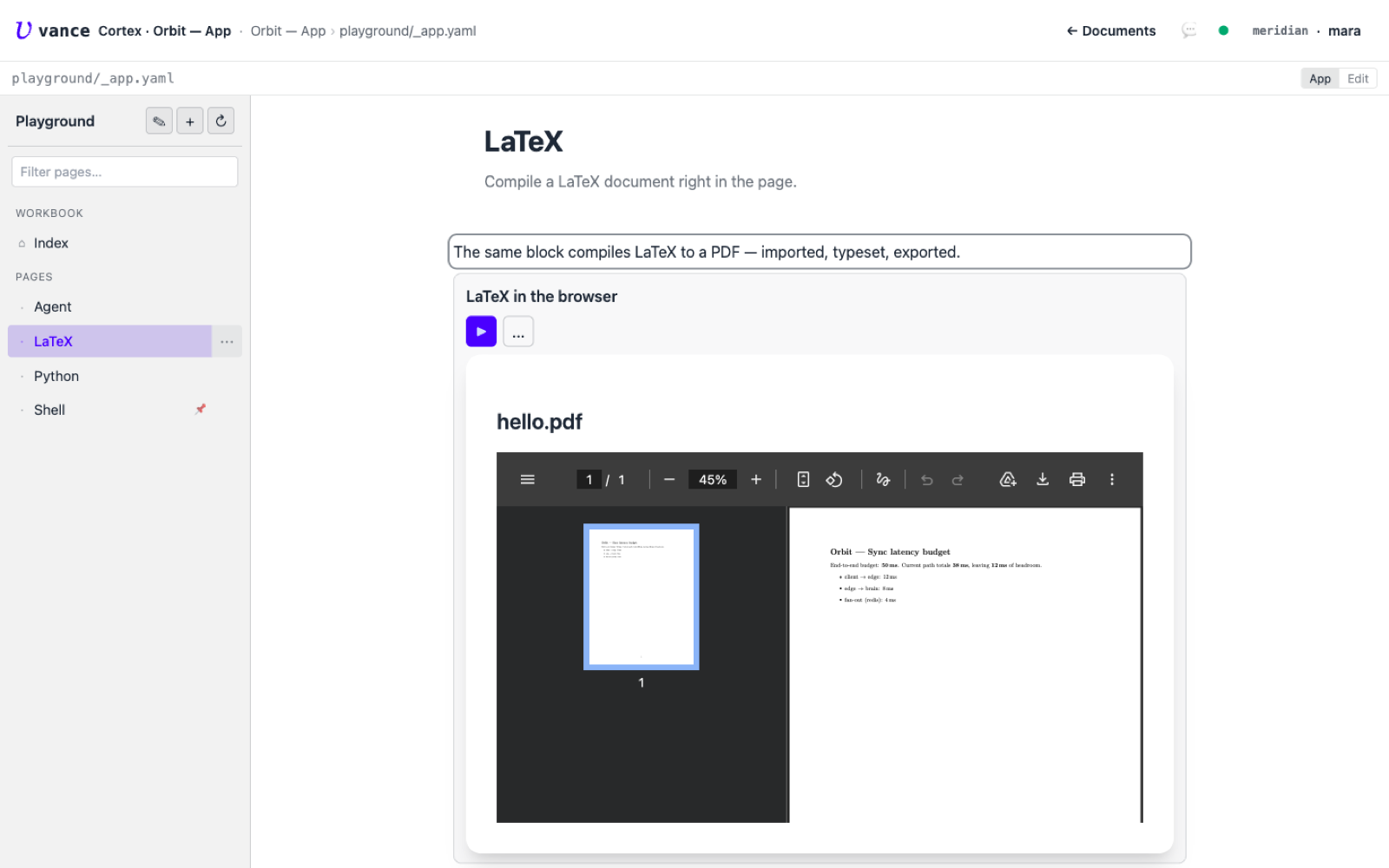
An agent
The block can also hand a prompt to an agent: add a session (recipe
arthur) and a type: agent task. The page kicks off a real agent turn and its
answer comes back in place.
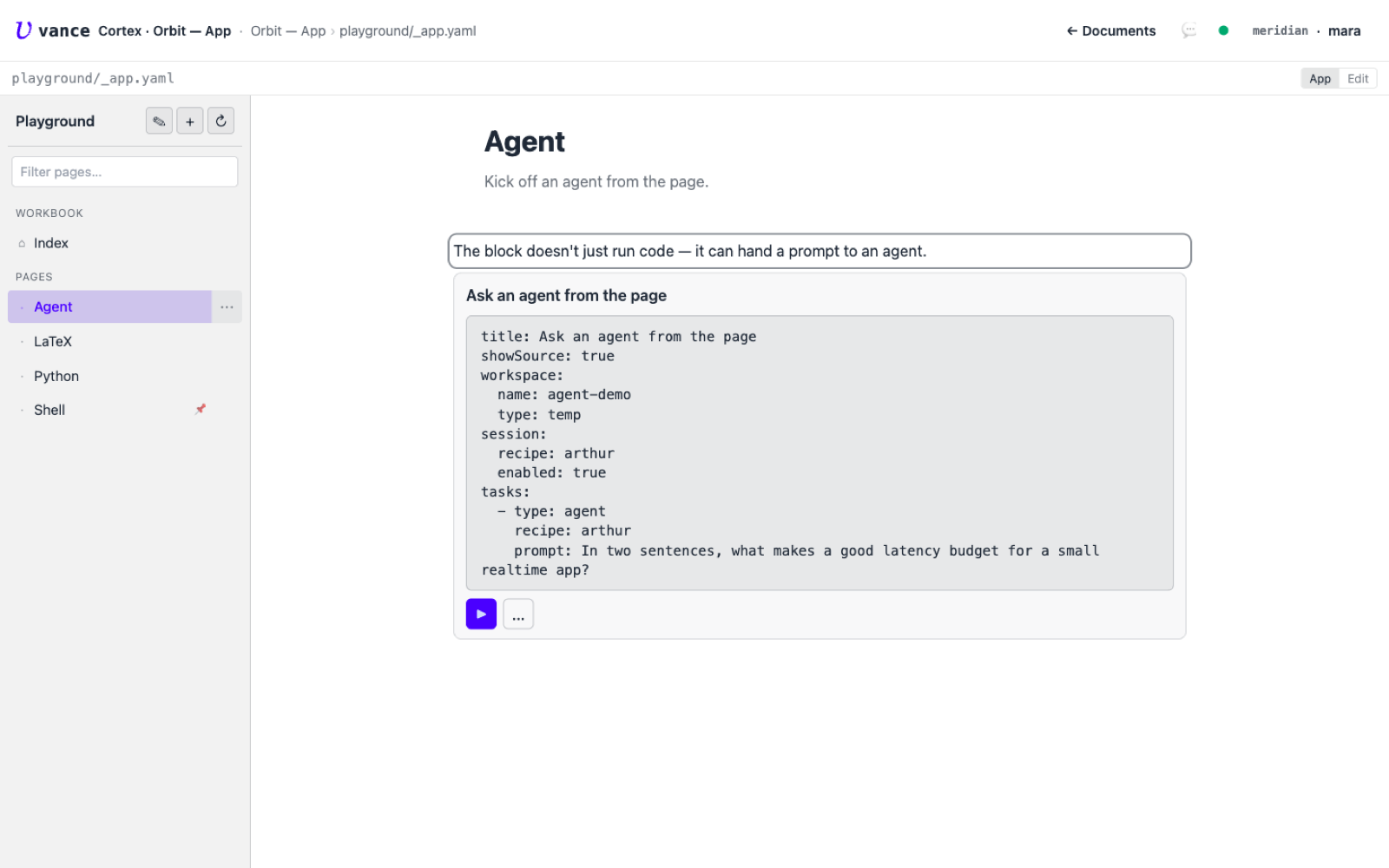
session (recipe arthur) plus a type: agent task with a prompt.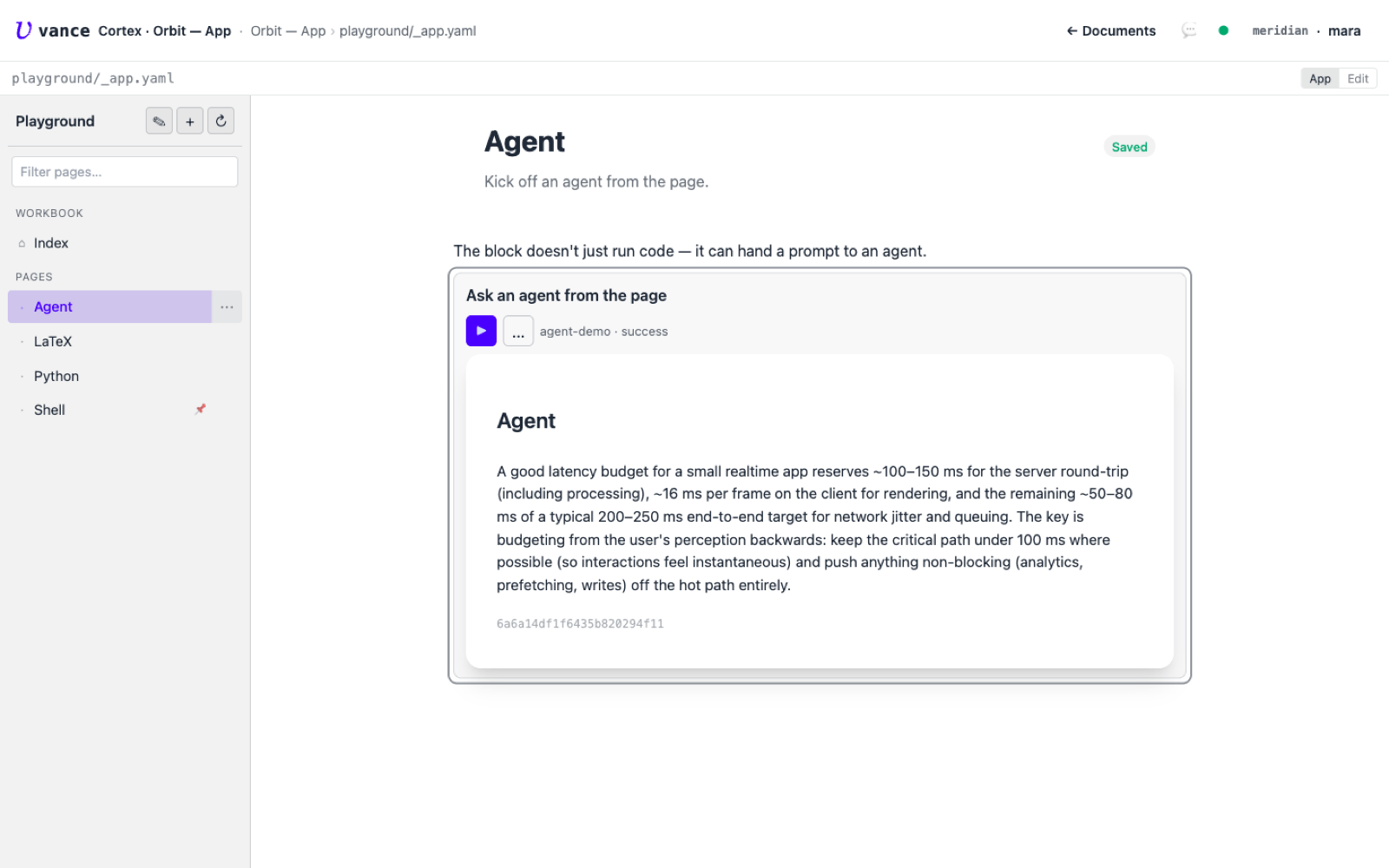
Same idea, still more: the block also runs JavaScript (with a session, for tool calls) and R, and can carry state across runs. More to come.