Stress-test an idea with a panel of judges
One agent gives you one opinion. A hard call — a pitch, a product, a campaign — wants several, from people who disagree. Vancetope lets you stand up a council: a named panel of distinct personas that argue a question out and hand back one synthesised verdict. Define it once; consult it for the rest of the project.
Here we build a Got-Talent-style jury — a ruthless market perfectionist, a pop-culture trendsetter, an unconventional fan-favourite, and an empath — and throw a real pitch at it. It runs on Vancetope’s Zaphod engine (a multi-head council); you never touch that name — a wizard writes it for you.
Table of contents
- Build the panel once
- The verdict
- Consult it again, anytime
- Keep the outcome as a document
- What this shows
- Where to go next
Build the panel once
In a chat, open the Wizards panel and pick Create a council. Give it a name, a purpose, and the members — each with a personality, a focus, and a catchphrase. Add an optional test question and it runs the panel the moment it’s built.
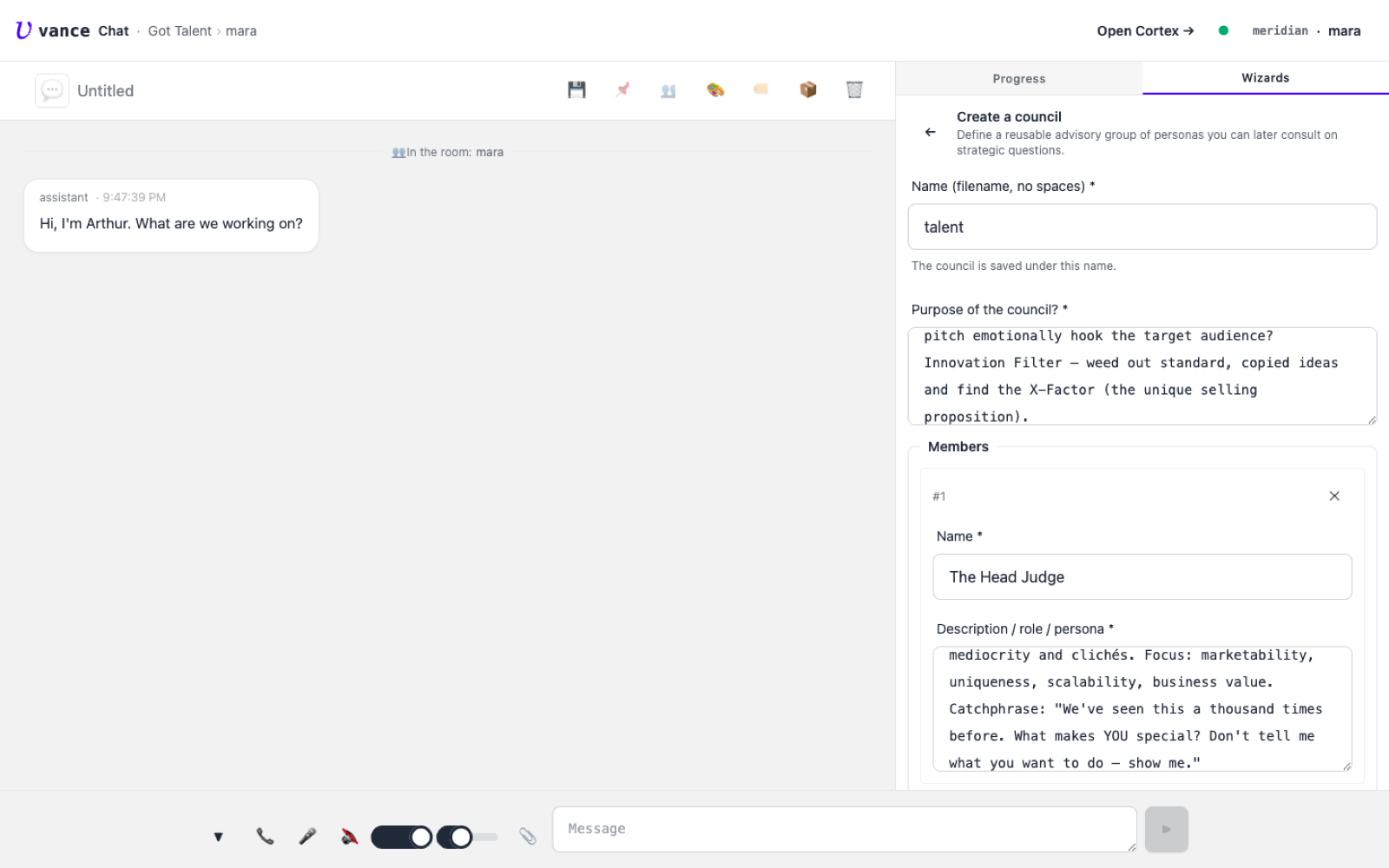
talent), the panel's purpose, and each member's persona. A test question at the bottom makes it run right away.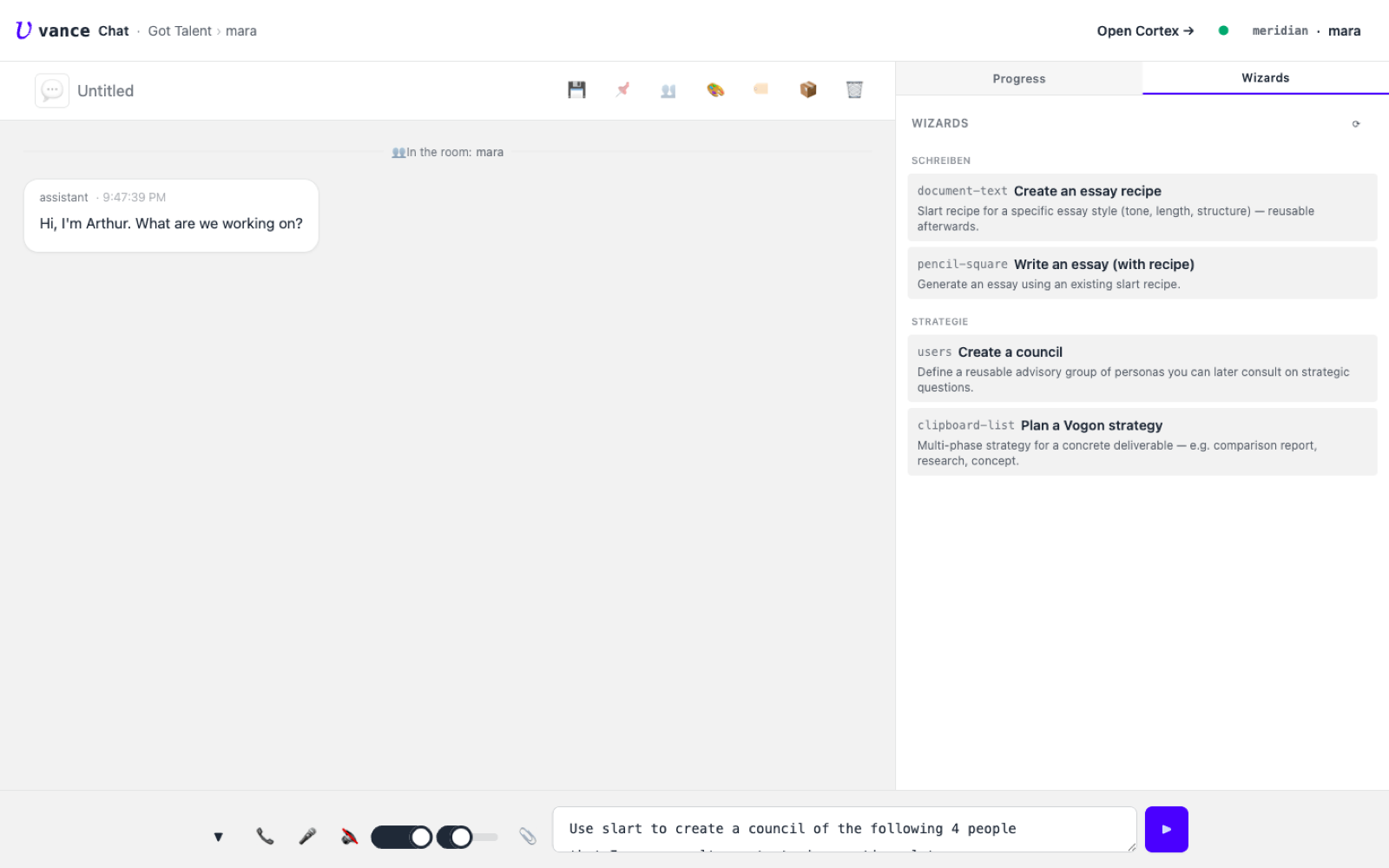
Behind the scenes the agent hands this to Slart, which writes a reusable council recipe and saves it under the name you chose. That’s a one-time setup — from now on the panel is a thing you can call by name.
The verdict
The panel deliberates — each member answers in their own voice — and the council hands back one synthesised verdict, not four separate essays. Here it judges a pitch: a TikTok channel where an artist paints hyper-realistic celebrity portraits while pulling goofy faces to trending audio.
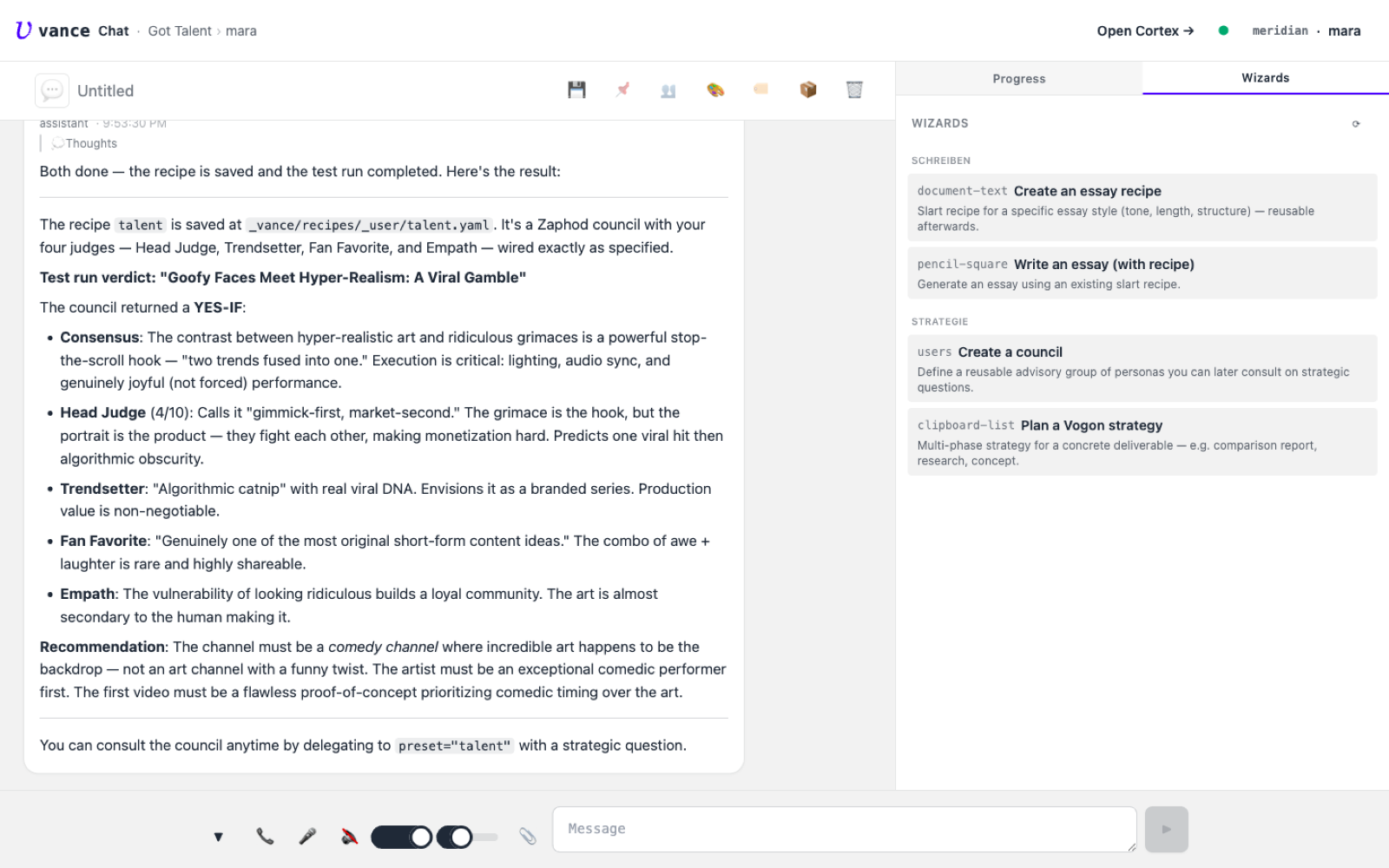
A YES-IF, with the disagreement intact: the Head Judge scores it 4/10 (“gimmick-first, market-second”), the Trendsetter calls it “algorithmic catnip”, the Fan Favourite loves it (9/10), the Empath finds the human hook — and the synthesis turns that spread into one clear recommendation. The friction is the point; a single agent would have smoothed it away.
Consult it again, anytime
The panel doesn’t vanish with the answer. In the same chat, just ask it another question — “Ask talent the following question: …” — and the whole council runs again on the new problem. Define the board of advisors once, bring every subsequent decision to it.
Keep the outcome as a document
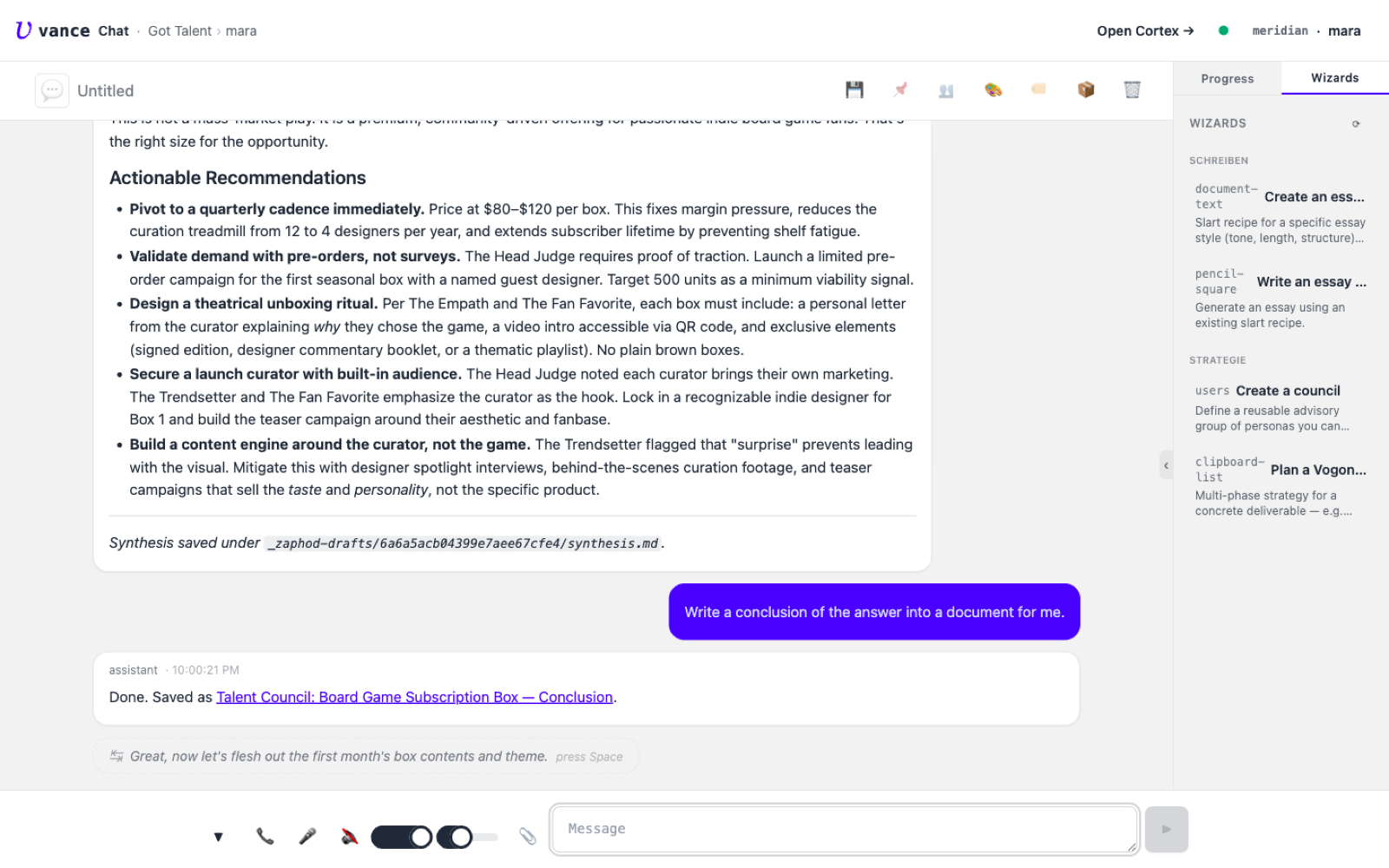
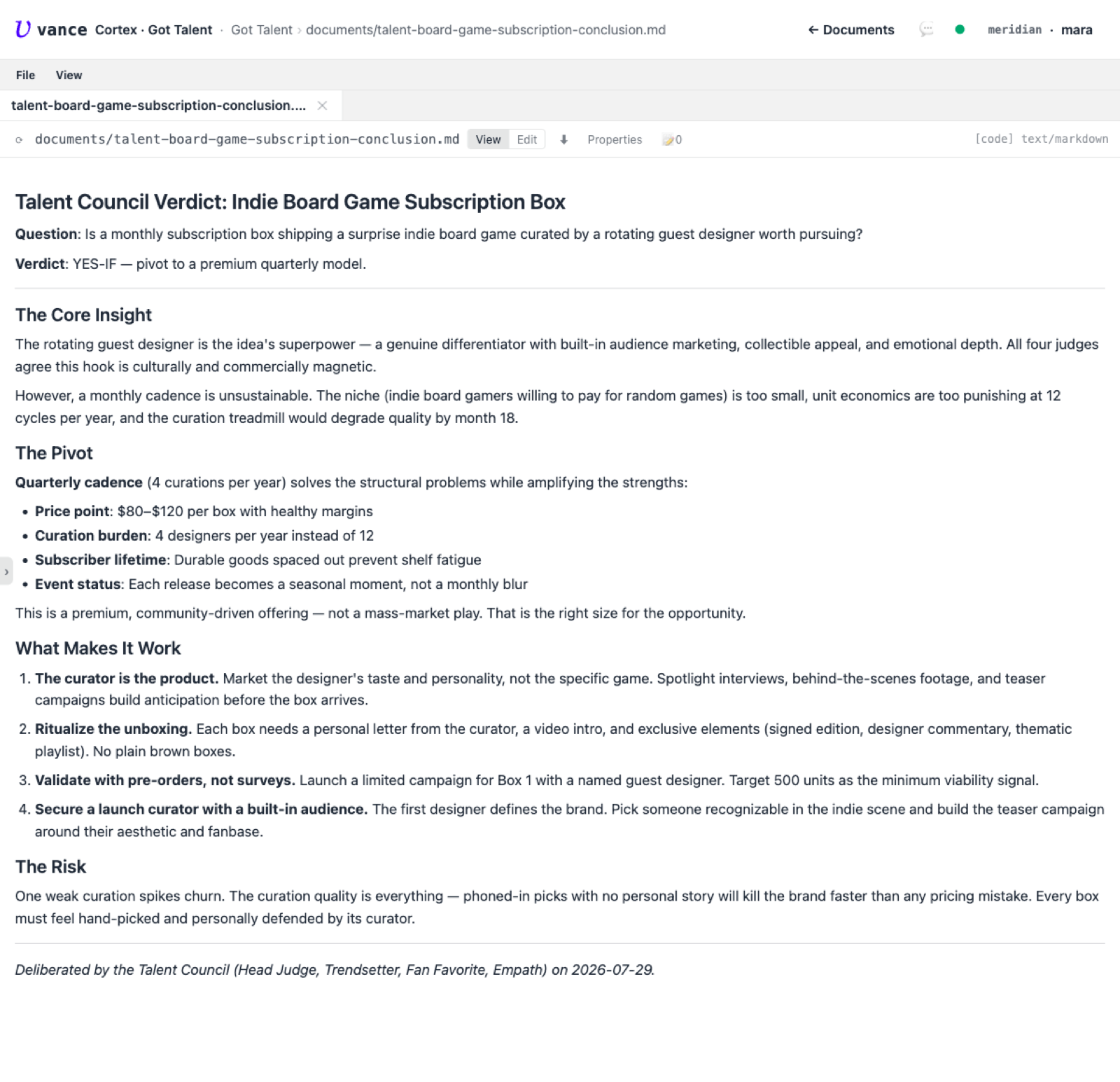
A verdict in a chat scrolls away. Ask the agent to write it up — “Write a conclusion of the answer into a document for me” — and it saves a structured document and hands back a link you can click.
What this shows
- Many voices, one answer. A council keeps the disagreement that makes feedback useful, then synthesises it — instead of the flattened single opinion one agent gives you.
- Define once, reuse forever. The panel is saved by name; every later question in the project can be put to the same board.
- From talk to artifact. The conversation becomes a document you own and can keep working on — not a message that scrolls away.
Where to go next
- The engine behind the panel: Zaphod spec.
- Wizards that write prompts for you: Wizards spec.
- Another multi-step story: Analyse a dataset, step by step.